


Calendly
Every meeting booked is a conversation started. Connect Calendly to Positive User through Zapier and turn each booking into an actionable contact profile. The moment an invitee schedules a call, their data flows into Positive User, tags are applied, automations fire, and the follow-up sequence begins. When someone cancels, you know about it instantly too.
From Booked Meeting to Automated Follow-Up in Seconds

Create Contacts the Moment They Book
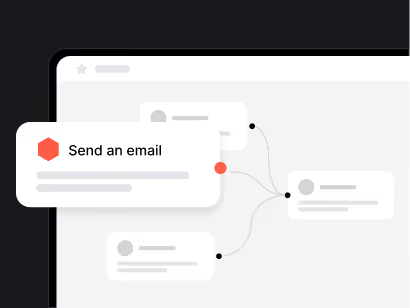
Someone clicks your Calendly link and schedules a demo, a consultation, or a support call. Zapier picks up the booking instantly and creates or updates a contact in Positive User with the invitee's name, email, event type, and scheduled time. By the time the confirmation email hits their inbox, their profile already exists in your CRM.
React to Cancellations Before They Slip Away
Cancellations happen. When an invitee cancels a Calendly event, Zapier detects it and can update the contact in Positive User: remove a tag, fire a custom event, or trigger a re-engagement automation. Instead of discovering the cancellation during your morning calendar check, your system reacts the moment it happens.

Trigger the Right Automation Based on Event Type
Not all bookings are equal. A "Sales Demo" invitee needs a different follow-up than an "Onboarding Call" attendee. Because Calendly passes the event type through Zapier, you can route contacts to different automations, tags, or deal stages in Positive User based on what they booked. One integration, multiple personalized paths.
Three simple steps to get started
Connect Both Accounts in Zapier
Log into Zapier and create a new Zap. Select Calendly as the trigger app and "User.com" as the action app. Authorize both accounts. You need a Calendly account with API access and admin access to your Positive User app.
Choose Your Trigger and Map Fields
Select "Invitee Created" as the trigger (fires when someone books a meeting). Map Calendly fields (invitee name, email, event type, event start time) to the corresponding Positive User contact attributes.
Test and Activate
Create a test booking on one of your Calendly event pages. Verify the contact appears in Positive User with the correct data. Turn on the Zap. Optionally, create a second Zap with the "Invitee Canceled" trigger to handle cancellations.

Popular implementation guides
- How to Integrate With Zapier: Complete walkthrough of connecting Positive User to Zapier: authentication, triggers, actions, and field mapping. Read Guide →
- Calendly + Positive User on Zapier: Browse the integration page on Zapier for available triggers, actions, and ready-made workflow templates. View on Zapier →
- Google Calendar Integration: If your team already uses Positive User's native Google Calendar scheduling, learn how Calendly and the built-in calendar can coexist. View Tutorial →
- What Are Events and How to Create Them: Define custom events in Positive User (like "demo_booked" or "meeting_canceled") that Calendly bookings can trigger through Zapier. View Tutorial →
- Automation Workflows: Set up automations inside Positive User that fire the moment a new contact arrives from a Calendly booking. View Tutorial →
- Custom Zapier Integration: Advanced guide for building custom workflows between Positive User and Zapier using webhooks and automation triggers. View Tutorial →
Frequently Asked Questions
Do I need coding skills to set this up?
No. The entire integration is configured through Zapier's visual interface. You select triggers, map fields, and activate. No code required.
What Calendly triggers are available on Zapier?
Calendly offers two main triggers: "Invitee Created" (fires instantly when someone books a meeting) and "Invitee Canceled" (fires instantly when someone cancels). Both are webhook-based, meaning data reaches Positive User within seconds of the event occurring.
What data does Calendly send to Positive User?
A Calendly booking typically includes the invitee's name, email, event type name, event start and end time, timezone, and any custom questions you've added to your Calendly event page. All of this can be mapped to Positive User contact attributes.
What happens if someone books multiple meetings?
The "Create/Update User" action in Positive User matches on email address. If a contact with that email already exists, the record is updated rather than duplicated. You can also fire a custom event (like "meeting_booked") for each booking to keep a log of all scheduled calls in the contact's timeline.
Can I route contacts to different automations based on the event type?
Yes. Calendly passes the event type name through Zapier. You can use Zapier filters or paths to check the event type and route the contact accordingly: apply different tags, create different deal types, or trigger different email sequences in Positive User.
How do I handle cancellations?
Create a separate Zap with the "Invitee Canceled" trigger. When someone cancels, you can update the contact in Positive User (remove a tag, change an attribute), fire a custom event (like "meeting_canceled"), or trigger a re-engagement automation that offers to reschedule.
Positive User already has a built-in Google Calendar scheduling feature. Why would I use Calendly?
Both tools serve the same purpose (letting contacts book meetings), but they work differently. Positive User's native calendar is built into the platform and tracks every booking step on the contact timeline. Calendly is an external scheduling tool with its own feature set (round-robin scheduling, group events, routing forms, payment collection, advanced integrations). If your team already uses Calendly and wants to keep it, this Zapier integration connects it to Positive User without switching tools.
Can I use Calendly's custom questions to enrich contact profiles?
Yes. Any custom question you add to your Calendly event page (company size, use case, budget range) is available as a field in Zapier. You can map it to a custom attribute in Positive User to enrich the contact profile at the moment of booking.
Can I cancel a Calendly event from Positive User?
Yes, through Zapier. Use a Positive User trigger (like a tag being applied or a deal status change) paired with Calendly's "Cancel Scheduled Event" action. You need the event's UUID, which is passed through when the booking was originally created.
Is the data GDPR-compliant?
Calendly, Zapier, and Positive User all offer GDPR compliance tools. Make sure your Calendly event pages include appropriate consent language, and that your Positive User consent management settings reflect the data collection purpose. Zapier is SOC 2 compliant and provides a GDPR data processing addendum.