



Reward double opt-in with a discount
Compliant two-step opt-ins that deliver an instant discount and lift confirmation rates.
Recover lost revenue by automatically re-engaging shoppers who leave without completing their purchase.
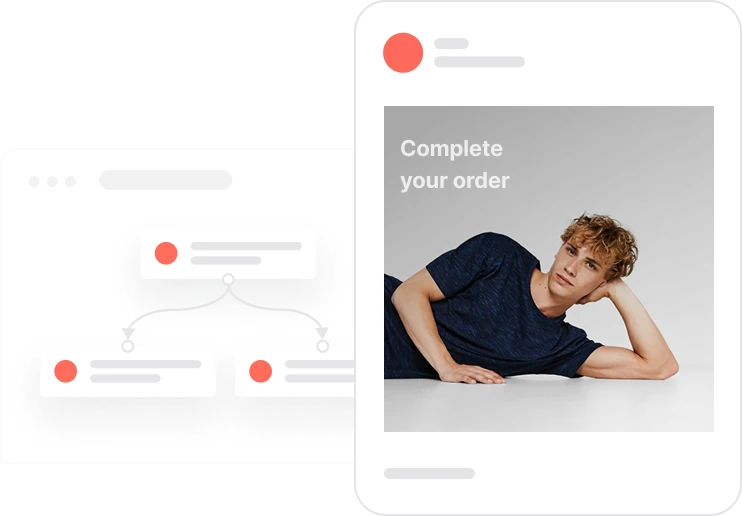
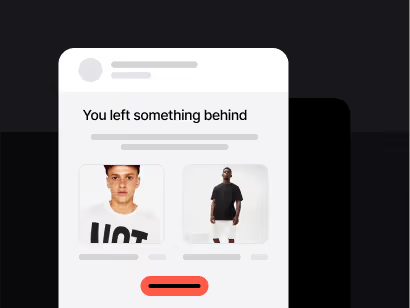
Between 70 and 80 percent of shopping carts are abandoned before checkout. Most of those are not hard no's. They are distracted browsers, price checkers, and people who got interrupted. A well-timed recovery email catches those shoppers at the right moment: one hour after they leave, when the products are still on their mind. The email shows exactly what they left behind, the last three items added, with images, names, prices, and a direct link back to finish the purchase. Before sending, the system checks for two things: did they already buy something in the last two days, and have they already received a recovery email recently. If either is true, no email goes out. If both checks pass and email consent is active, the message goes. A seven-day send window prevents the same shopper from being hit with the same reminder every time they browse.
A shopper adds a product to their cart and then leaves the site without buying. One hour later, the automation fires. First check: did this contact make a purchase in the last two days? If yes, no email. Second check: do they already have the recent recovery email tag from the last seven days? If yes, no email. Both checks pass. Third check: do they have a valid email and email consent? If not, the flow ends. If yes, a personalized email goes out showing the last three items they added to the cart, complete with product images, names, prices, and a one-click link to pick up where they left off. As soon as the email is sent, the seven-day send window tag is applied. A parallel automation watches for that tag and removes it automatically after seven days, making the contact eligible for the flow again on their next cart abandonment.
Add to cart event trigger: When a contact triggers the Add to cart product event, the cart recovery workflow starts. This event must be tracked via the JavaScript SDK on the product and cart pages.
Wait 1 hour, then check conditions: After a 1-hour delay, the system checks whether the contact has made a purchase in the last 2 days and whether they already have the send frequency tag active. If either is true, the flow ends without sending. This prevents emailing customers who already converted or were recently contacted.
Verify email address and consent: If the contact has not purchased recently and has no active send frequency tag, the system checks for a valid email address and Consent email = TRUE. Both must be true for the recovery email to be sent.
Send personalized cart recovery email: An automated email is sent showing the last three products the contact added to their cart in the last two days, each with its product image, name, price, and a direct link to purchase. The subject line is designed to create curiosity rather than urgency.
Apply send frequency tag and schedule removal: Once the recovery email is sent, the send frequency tag is applied to the contact. A separate automation triggered by Tag added waits 7 days and then removes the tag automatically. This returns the contact to an eligible state for the next cart abandonment.
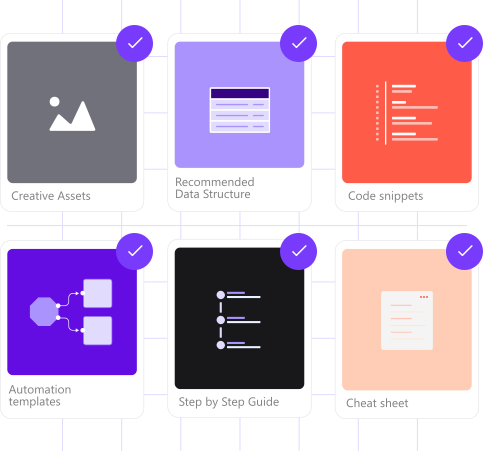
Implementing use case automation involves several key steps and tools. Here's comprehensive ressources to get you started:
Marketing on a new level with a beautiful visual, drag & drop creator.
Send personalized emails that resonate with your users at the perfect moment.
A contact attribute is a data field stored on the contact's profile, used for segmentation, personalization, reporting, and automation.
A product attribute is a data field describing a property of a product stored on the product profile. These fields are used to display products dynamically in the recovery email.
A product event tracks a contact's interaction with a specific product.
An event is a custom piece of information about something your contact does.
Segments are dynamic groups generated based on predefined criteria, which update in real-time as contact behaviors and attributes change.
Trusted by fast-growing teamsStart from a proven use case designed to help you engage faster, with relevance and impact.
More ways to engage your audienceCompliant two-step opt-ins that deliver an instant discount and lift confirmation rates.
In-app messages that surface new features the moment mobile users open the app.
Automated deal and task creation that puts sales on every expired subscription within days.