


Summary
Transactional SMS are automated messages triggered by a specific user action (purchase confirmation, shipping notification, appointment reminder, password reset). They differ from marketing SMS in that they are informational, expected by the recipient, and exempt from standard opt-in requirements in most markets (though consent for account creation still applies). Key setup steps: identify trigger events, write short message templates, configure delivery timing, set up fallback for delivery failures, track delivery rate. Best practices: be concise (under 160 characters), identify sender clearly, send within minutes of the trigger event. Positive User offers transactional SMS automation integrated with email workflows.
Transactional SMS are automated messages triggered by a specific action: an order is placed, a booking confirmed, a password reset requested. Unlike promotional SMS, recipients expect them — which is why they achieve open rates close to 100% within minutes of delivery. That expectation is also what makes them operationally critical: a missed or delayed transactional message is not just an inconvenience, it's a trust signal that failed.
What counts as transactional SMS
The defining characteristic of a transactional message is that it contains information the recipient needs as a direct result of an action they took. Common types include:
- Order confirmations and purchase receipts
- Shipping updates and delivery notifications
- Appointment and booking confirmations
- Appointment reminders (typically 24h and 1h before)
- Two-factor authentication (2FA) codes
- Password reset links
- Account alerts (failed payment, suspicious login, subscription renewal)
- Support ticket updates and resolution confirmations
- Return and refund status notifications
This distinguishes transactional SMS from marketing SMS, which promotes an offer to a list of recipients regardless of whether they initiated an interaction. The line matters legally and operationally. See Legal framework below.
The gray zone. Some messages sit between the two categories. An order confirmation that includes a "you might also like" product block is partly promotional. A shipping notification with a discount code for the next order is partly marketing. When in doubt, treat the message as promotional from a compliance standpoint. A mixed message that a recipient didn't expect and didn't consent to is promotional by nature, regardless of how you label it internally.
Legal framework
Transactional SMS occupies a different legal space from marketing SMS in most markets. Because they are service messages responding to a recipient's own action, they generally do not require prior opt-in consent in the same way marketing messages do. However, three conditions are typically required:
Existing relationship
The recipient must have an existing, active relationship with your business. They created an account, placed an order, made a booking. Sending a "transactional" message to a purchased list is not transactional.
Sender identification
Including an identification of the sender in every message is legally required in most jurisdictions. This can be a brand name in the message body or an alphanumeric sender ID, depending on your market and carrier.
Content relevance
The message must relate directly to the transaction that triggered it. Adding promotional content changes its legal classification in most markets.
Opt-out for transactional SMS: even when opt-in is not required, recipients generally retain the right to stop receiving certain types of messages. Configuring a clear, functional opt-out path, even for transactional messages, reduces complaints and carrier filtering risks. Some markets (notably the US under TCPA) require an opt-out mechanism regardless of message type.
Always consult applicable regulations for your specific market before sending. Regulations vary significantly between the US (TCPA), EU (ePrivacy Directive, national implementations), UK (PECR), Australia (Spam Act), and others.
Setup best practices
Timing. Send within minutes of the trigger event. A shipping notification arriving 24 hours after dispatch loses its value entirely — the customer may have already contacted support, or may have assumed a problem. For 2FA codes, delivery within 30 seconds is the functional threshold. For appointment reminders, configure the trigger relative to the appointment time (e.g., 24h before and 1h before), not relative to the booking event.
Message content
- Identify your brand in every message — either as an alphanumeric sender ID or explicitly in the message body.
- Include only the information relevant to the triggered event: order number, appointment time, tracking link, code.
- Avoid promotional language. "Your order #12345 is confirmed" is transactional. "Your order is confirmed — use NEXT10 for 10% off your next purchase" is mixed.
- Use merge fields for relevant details: recipient name, order number, appointment time, tracking link. In Positive User, these are configured through the Journey Builder SMS action using contact and event attributes.
Delivery failure handling
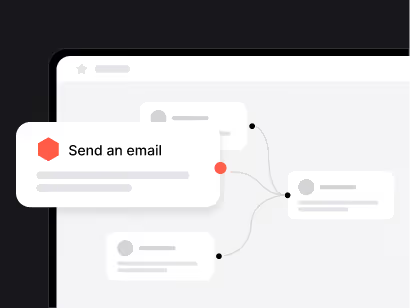
Configure delivery failure alerts so your team is notified when a message does not reach the recipient. Common failure causes include invalid or disconnected numbers, carrier filtering, and number portability issues. In Positive User, delivery status is available per message in the contact's activity history. For critical messages (2FA codes, booking confirmations), consider a fallback to email if SMS delivery fails after a configured interval — configurable as a branching condition in Journey Builder.
Number validation
Running your contact list through a number validation service before sending reduces undeliverable attempts and protects sender reputation. International number formatting (E.164 format: + followed by country code and subscriber number, no spaces) is required for routing.
Frequency capping
Even for transactional messages, excessive volume can trigger carrier filtering. If a single order event fires multiple messages (confirmation, payment receipt, fulfilment started, shipped, out for delivery, delivered), consider which messages are genuinely necessary and which can be consolidated or omitted.
Common mistakes to avoid
Sending too late. The value of a transactional SMS is tied to its timing. A password reset code that arrives five minutes after the request may arrive after the user has given up and called support.
Using transactional SMS as a promotional channel. Adding upsell content to a transactional message changes its legal classification and damages recipient trust. Recipients who expected a shipping update and received a discount pitch are more likely to complain or opt out.
Ignoring delivery reports. Undelivered transactional messages create silent failures — the customer didn't receive their 2FA code, their appointment reminder, their booking confirmation. Without monitoring delivery reports, these failures only surface as inbound support contacts.
Not testing across markets. A template that works in one market may fail in another due to character encoding differences, sender ID restrictions, or carrier rules. Test your transactional templates in each target market before full deployment.