


Summary
Email marketing means sending commercial messages and transactional emails to people who agreed to receive them, whether that is a scheduled email marketing campaign, a newsletter, or a message triggered by something a contact just did. It is the only marketing channel where the audience belongs to you rather than to a platform, which is why it survives every announcement of its death. Three things decide whether it works: how the list was built, how it is segmented, and whether your sending domain is authenticated.
You send a campaign to 40,000 people. Around 12,000 of them have not opened anything from you in over a year.
Here is the part nobody warns you about: those 12,000 are the reason the other 28,000 are starting not to see you either. Mailbox providers, which older guides still call internet service providers, watch how people react to your mail. A list where most recipients ignore you teaches Gmail that your mail is ignorable, and Gmail acts on what it learns. The email subscribers who still want to hear from you end up paying for the ones who stopped.
Which leads to the most counterintuitive advice in this whole article, and the one most teams refuse for about a year before giving in. To reach more people, mail fewer of them. Most of an email marketing strategy is decisions about who not to email.
What email marketing is, and why it keeps not dying
Email marketing is sending commercial messages and transactional emails to people who agreed to receive them. Scheduled email campaigns, newsletters with a shape readers recognize, and automated messages that fire off something a contact just did.
Some of it is promotional emails aimed at winning new business. Much more of it, in practice, is keeping existing customers close, which is where customer loyalty and brand recognition actually get built.
Somebody announces its death every year, usually a digital marketer with a newsletter. The spending disagrees. In Grand View Research's analysis of the marketing automation market, email accounts for 26.7% of its value, the largest share of any channel. Nobody is buying email marketing software out of sentimentality.
The reason it survives is duller and better than the usual list of the benefits of email marketing. Email is the oldest channel in digital marketing and the only marketing channel where the audience belongs to you. Reach on social media depends on an algorithm you cannot see and cannot appeal. Search position depends on updates you find out about afterward. A list of addresses with documented consent comes with you when you change tools, change agency, or change marketing strategy completely. It is the only audience you can take out of the building. You can see how it runs alongside the other marketing channels on the Positive User email marketing page.
Your list is an asset, which means you are carrying it
Owning something means being responsible for it, and email marketers tend to think about the first half only.
The second half has numbers attached. IBM's 2025 Cost of a Data Breach Report puts the global average cost of a breach at 4.44 million dollars, with the United States setting a record at 10.22 million. DLA Piper's annual survey counts 6.714 billion euros in GDPR fines issued since 2018.
This is not an argument for collecting less. It is an argument for knowing what you hold, why you hold it, and being able to show that someone said yes. Which is, conveniently, the same discipline that makes a list perform. You will rarely get two arguments this different pointing at the same piece of work, and both are protecting the same thing: the customer relationships that list represents.
Building a list that does not burn out
How somebody arrived on your list predicts their behavior better than anything you do afterward. An address given in exchange for a prize draw behaves nothing like one left by a person who read a guide all the way to the end. You can dress that up with segmentation later, but you cannot undo it.
Say what they get and how often
Declaring the frequency will lower your number of new subscribers. Take the trade. You are choosing between a smaller list that reads you and a bigger one that reports you.
Collect consent channel by channel
Agreeing to your newsletter is not agreeing to your texts or your push notifications. Separate things, collected separately, stored separately. Permission based marketing is not a slogan on this point, it is the only version that keeps working.
Keep the receipt
Date, source, and the exact wording somebody accepted. If a regulator asks, producing that is your job, not theirs. In the United States the CAN-SPAM Act sets the floor for commercial email: honest headers, a working unsubscribe link, and no unsolicited emails to anyone who has already opted out.
Skip incentives unrelated to what you sell
A giveaway brings you people interested in the giveaway. They will not buy, a fair number of them will hit the spam button, and that teaches spam filters to distrust everything else you send.
Write the welcome sequence before you build the signup form
Someone who hears nothing for three weeks has forgotten who you are, and your first real campaign arrives looking like it came from a stranger.
There is no minimum list size, incidentally. Two hundred addresses collected deliberately will beat ten thousand collected by accident, because mailbox providers score engagement and not volume. This is genuinely good news for small teams and it is almost never presented that way.
Segmentation, and knowing when to stop
Elaborate segmentation is one of the more respectable ways to avoid sending anything. You can spend a quarter building target audience logic and ship nothing, and everyone in the review will nod. Four criteria cover most of what you actually need.
Purchase history and lifecycle stage will carry most of your targeted emails on their own, which is why the other two can wait if you are short of time.
One rule keeps this honest. You build a segment in order to change what the message says. If two segments get the same email, the split was decoration, and you should delete it and spend the time on the writing instead. Our practical guide to email segmentation and personalization goes further, including the point where personalization stops paying for itself.
Deliverability, or why good email disappears
Email deliverability is the odds of your message reaching the inbox rather than the spam folder. Three things decide it, and only one of them is the writing, which is why no subject line has ever rescued a badly configured domain.
Domain authentication
SPF, DKIM and DMARC are records that tell a mailbox provider the mail genuinely came from you. Without them, a share of your sending does not arrive no matter how good it is. This is a one-time technical job rather than a marketing one, and it is the highest-leverage hour in this whole article. Our guide to DMARC covers the implementation, including what changed when Gmail, Yahoo and Microsoft made it a requirement.
Sending reputation
Built by how people react to you. Opens and clicks raise it, spam complaints and hard bounces lower it. This is why a purchased list is not only a legal problem. It damages a reputation that takes months to rebuild, it does that damage to future campaigns including the good ones, and on the shared IP addresses most senders start out on it damages other people's mail too.
List hygiene
Addresses that have not reacted in a year should come off your regular sends, along with the misspelled email addresses every signup form quietly collects. Every instinct you have will argue against this, and so will at least one person in the meeting, because the list will get smaller and somebody reports that number upward. Do it anyway. Mailing inactive subscribers drags down your average engagement, and your average engagement is what decides whether the engaged ever see you.
One honest note on benchmarks, since you will meet plenty of them. No neutral institution publishes average email marketing metrics such as open or deliverability rates. Every figure in circulation comes from a platform vendor reporting on its own customers, including ours. Email marketers repeat them anyway. Treat all of them as vendor data and build your baseline from your own numbers, which is less satisfying and considerably more useful.
Email marketing with Positive User
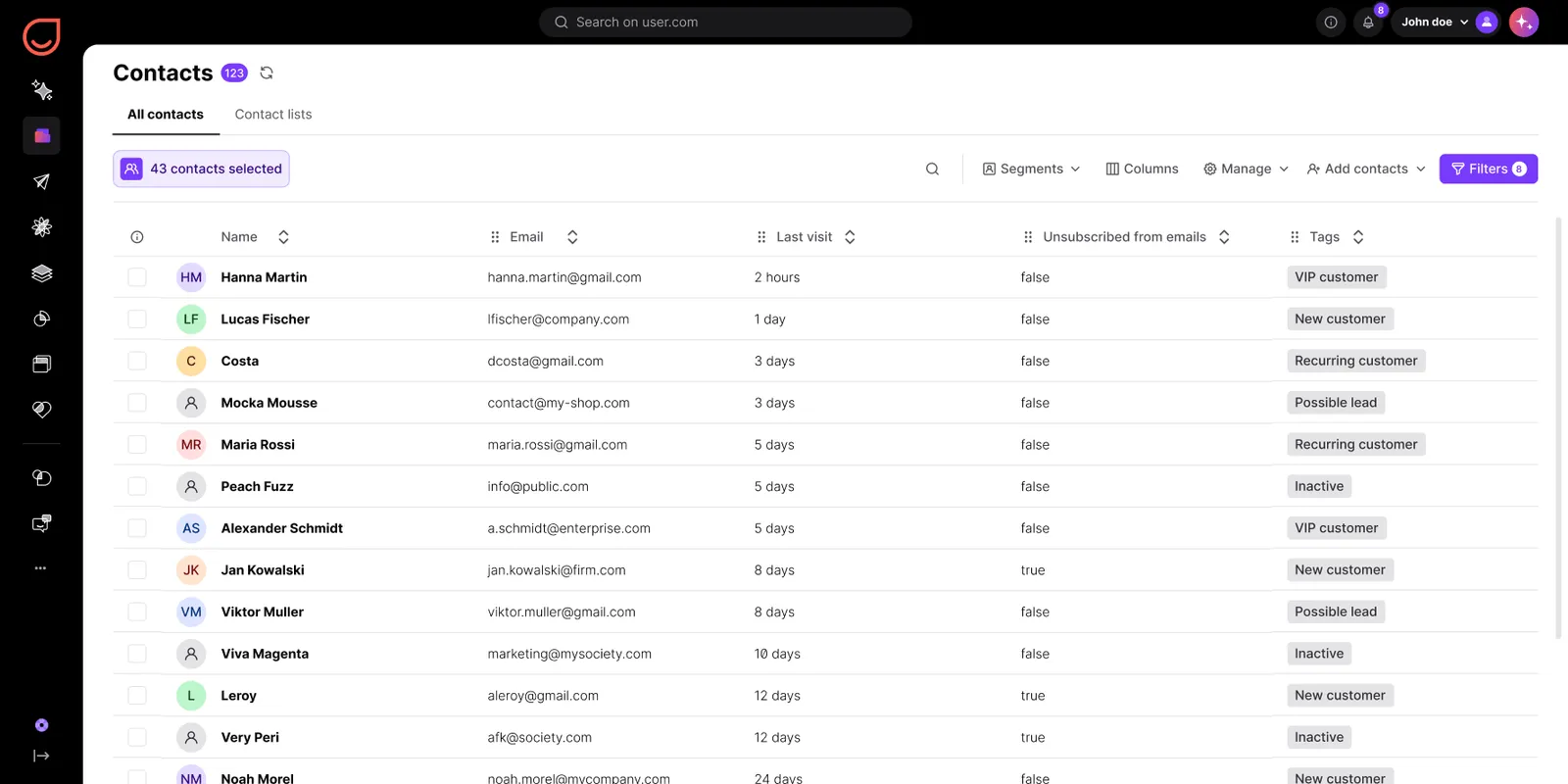
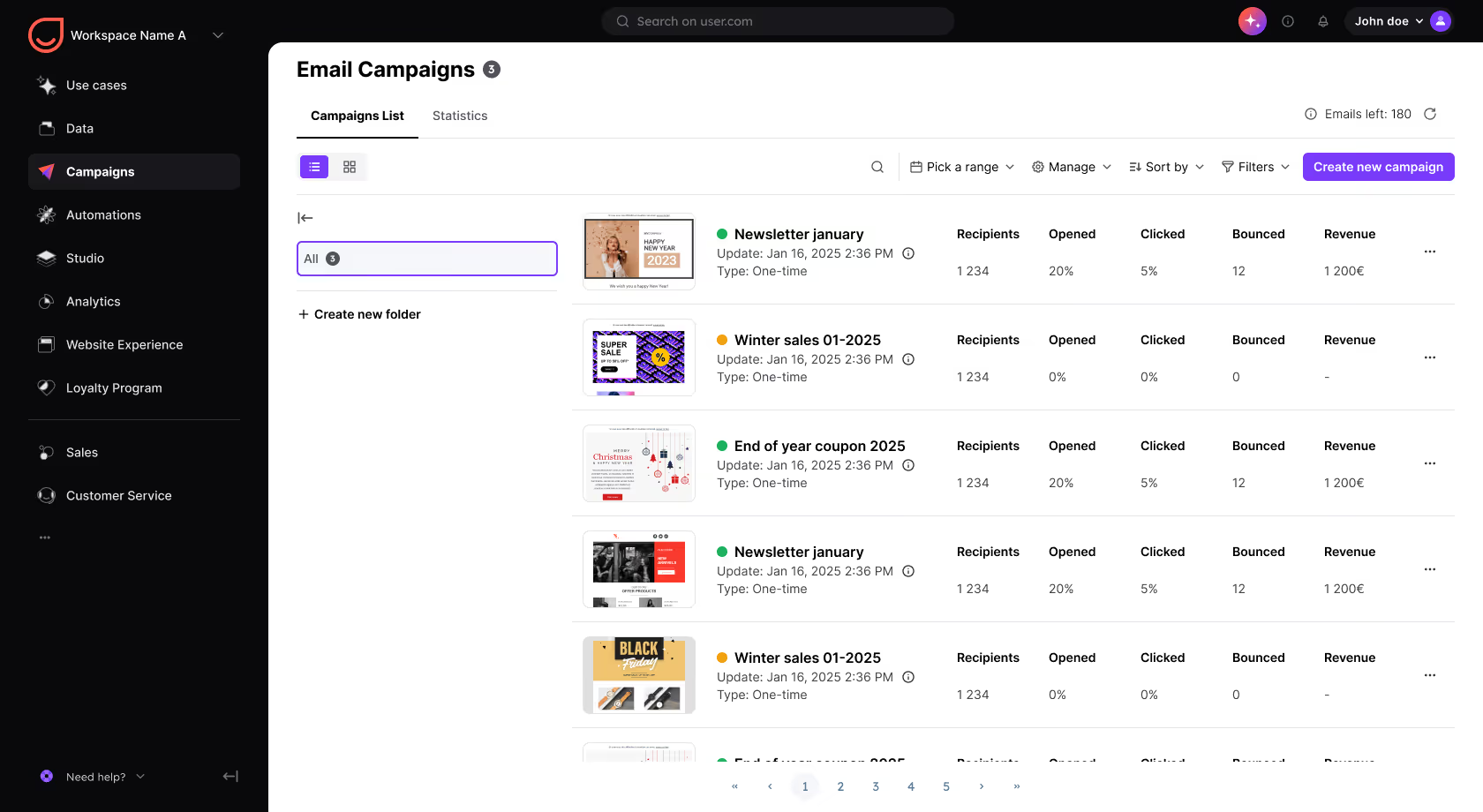
Email sends from the same platform as the other channels, which is the practical difference between an email service provider and a marketing platform. A contact has one profile, one set of consents, and one interaction history regardless of where the interaction happened.
Segments can read behavior from anywhere
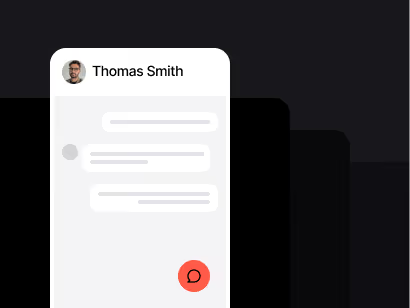
A click in a text message, a page viewed on your site, a conversation in chat, all on the same record. Which means targeted messages in email can be built from something that never happened in email.
An unsubscribe applies everywhere at once
This kills the single most common complaint any marketing team receives, the one where somebody leaves your newsletter and gets a text from you two weeks later.
Marketers build and change the content
Drag and drop editor, reusable email templates, previews on mobile devices, no development work to send, and none to fix something at nine in the morning when you spot the typo.
Email can hand off mid-journey
Send the email, wait a day, check who opened it, then reach the rest by SMS or push. That is email automation doing the work a bigger send would otherwise do badly, and your reach goes up without your send volume going up with it.
What this looks like with real customers
These three were picked because their published figures are the most relevant we have.
LG Electronics reports 50% open rates on automated campaigns and doubled revenue after switching to behavior-triggered messaging.
Somfy grew its newsletter subscriber base by 162% over two years by collecting behavioral data and acting on it, rather than buying reach.
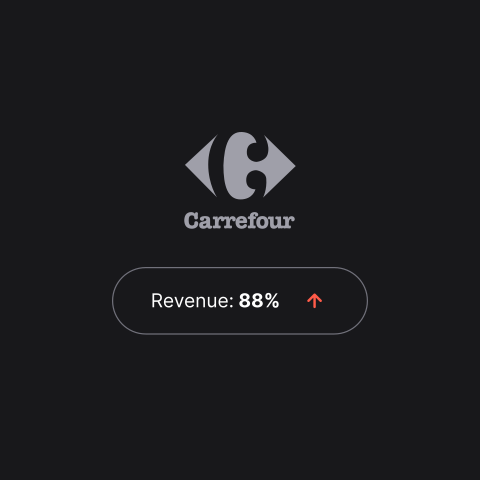
Carrefour puts an 88% revenue increase down to automation. Read the Carrefour story.
None of them got there by sending more marketing emails. All three got there by sending to fewer people, more precisely, at moments the customer chose rather than the calendar. Email marketing automation is what made that precision affordable.
How to judge an email platform
Email marketing platforms all tick every box on the feature list, from email marketing templates to AI email subject line generators, so the feature list is not going to help you. These six questions will.
Ask all six of everyone and write the answers in one place. The shortlist tends to make itself, and a table built from your own answers is worth more than any comparison of email marketing tools published by one of the candidates, ours included.
Why Positive User
One record across every channel
Email, SMS, WhatsApp, web push, mobile push, mobile wallet and live chat, reading the same profile and the same segments. Most stacks reach that coverage by connecting three products, and that is where the drift starts.
One set of consents
Recorded once, applied everywhere, opt-out included.
Data stored in the European Union
A storage location, not a clause about transfers. In regulated sectors that ends a conversation before it starts
Built and changed by marketers
Here is the test worth insisting on during a demo, and it is worth being slightly rude about: hand the keyboard to whoever will use this every day and ask them to build and send a segmented email marketing campaign. If they cannot, you are buying a tool for a team you do not have.
Full channel coverage and available connections are on the Positive User email marketing page.
Want to see it running on your own list? Book a Positive User demo.
Frequently asked questions
What is email marketing?
Email marketing is sending commercial or service messages to people who agreed to receive them. It covers scheduled marketing campaigns, newsletters, and automated messages triggered by a contact's behavior, such as welcome emails or a cart reminder. What separates it from every other channel is ownership: the list is yours, not a platform's.
What is the difference between a newsletter and a campaign?
A newsletter goes out on a rhythm, with a shape people recognize, to subscribers who expect it. An email marketing campaign is a one-off tied to an offer or an event. The newsletter builds the habit and the campaign spends it, which is why marketing campaigns work better at companies that also send a newsletter.
How often should you send?
Let your unsubscribe rate set the ceiling rather than your editorial calendar. Your starting point is the frequency you promised at signup, because that is what people agreed to. The signal to slow down is unsubscribes climbing while click through rates fall. Opens falling on their own means very little these days.
Should you remove inactive contacts?
Yes, and you will not want to. Addresses that have opened nothing in a year pull down your average engagement, and average engagement is what decides whether your active email subscribers see you at all. Send one reactivation campaign first, then take the non-responders off your regular sends and explain to whoever tracks list size why the number went down.
Why is my email going to spam?
Check domain authentication first: SPF, DKIM and DMARC. It is the most common cause and the only one you fix once. If those are correct, it is usually sender reputation, which you rebuild by mailing only your most engaged contacts for a while and accepting smaller numbers in the meantime. Mailing potential customers who never asked to hear from you is the fastest way to undo the repair.
What are SPF, DKIM and DMARC?
Three records in your domain configuration. SPF lists the servers allowed to send on your behalf, DKIM signs each message cryptographically, and DMARC tells providers what to do with mail that fails either check. It is a technical task, it takes an afternoon, and it only has to happen once. Most email marketing services will walk you through it.
Does consent to a newsletter cover SMS and push?
No. Each channel needs its own consent, given knowingly and freely, stored with its date and source. An opt-out recorded in one channel should be honored in all of them, and if your tools cannot do that, that is worth knowing before a customer discovers it for you.
Which metrics actually matter?
Opens get less reliable every year because of mailbox privacy features, so build less on them than you used to. Email marketing performance comes down to four key metrics: click through rates, unsubscribe rate per send, spam complaint rate, and the revenue attributed to the campaign in whatever you use for that, Google Analytics included. The last one is the only one that answers whether the send was worth making. We have separate guides on click-through rate, unsubscribe rate and conversion rate, each with honest benchmarking.
Where to start
If you do one thing this month, verify your domain authentication.
It is the only item here that works immediately, applies to every message you send, and requires changing nothing about your content. Segmentation, list hygiene and the rest of the best practices in this guide pay off later and matter enormously, but without the technical setup underneath they are work aimed at results nobody will ever see.
Start free or book a demo, and see email running alongside SMS, WhatsApp and wallet from one contact record, with your data stored in Europe.
Ready to take action?