


Summary
Customer segmentation is the practice of grouping customers who share characteristics or behaviors so each group gets messages and offers that fit it. Common types are demographic, geographic, behavioral and value-based segmentation, for example first-time buyers, repeat customers or lapsed customers with a high past spend. Segmentation works when each segment changes what you send, and when segments update as customer behavior changes.
{{BUTTON-1}}
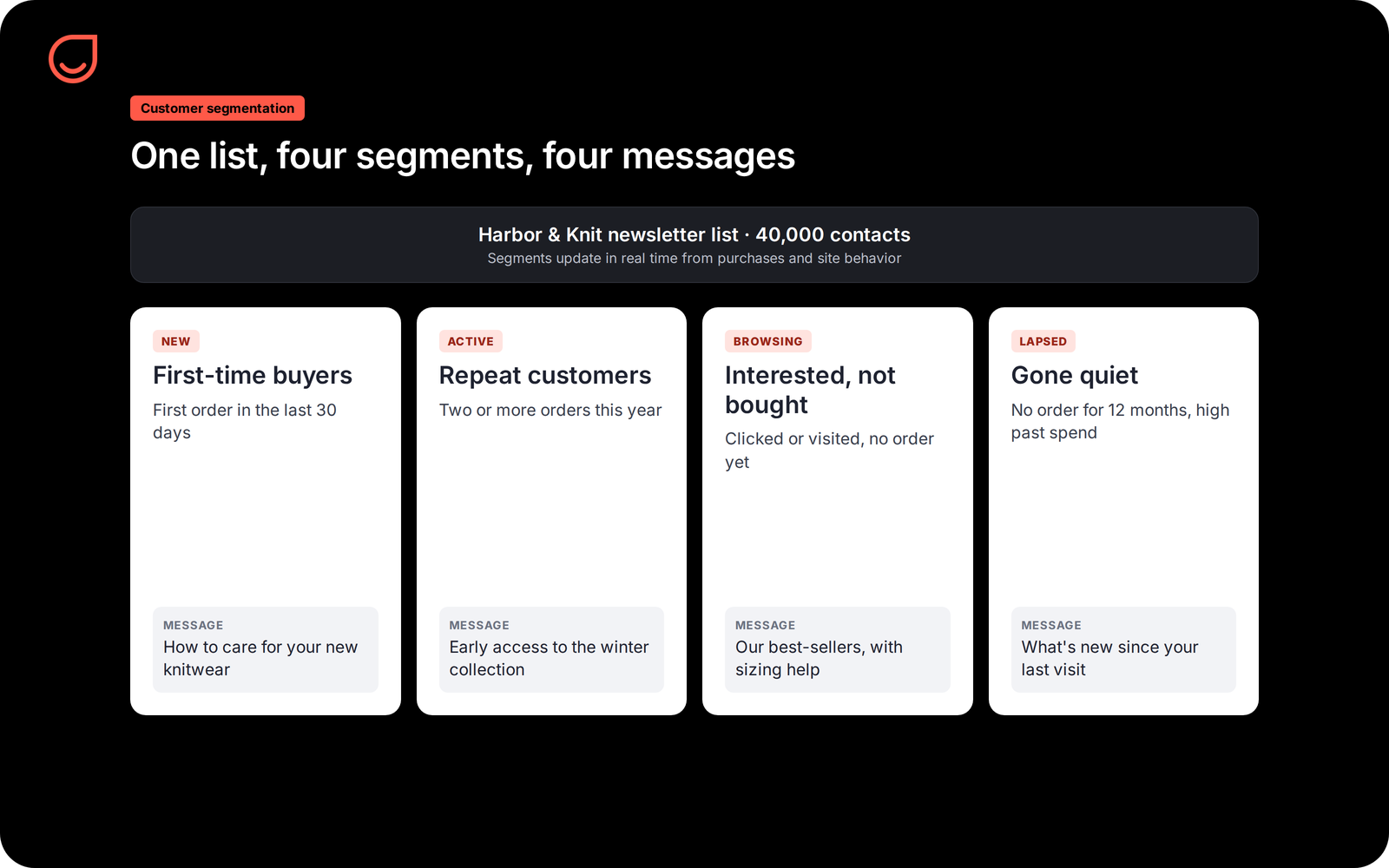
Your newsletter goes out to 40,000 people on Tuesday morning. The same subject line, the same products, the same offer, for the customer who bought three times last month and for the one who signed up two years ago and never ordered. Open the report a week later and you'll find the average result hides two very different stories. Customer segmentation is how you stop averaging, and it's the foundation of every workflow in our marketing automation guide.
What is customer segmentation?
Customer segmentation is the practice of grouping customers based on shared characteristics or behaviors, so you can send each group messages, offers and experiences that fit it. A segment might be "first-time buyers in the last 30 days", "B2B accounts with more than 50 employees" or "subscribers who clicked but never purchased".
Segmentation works when each segment changes what you do. A group you would treat exactly like everyone else is only a label.
Customer segmentation vs market segmentation
Market segmentation divides a whole market, including people who have never heard of you, to decide which audience to target and how to position a product or service. Customer segmentation works on the customer data you already have: your contacts, their purchase history and their behavior. Market segmentation helps you choose a target audience; customer segmentation helps you talk to the customers you've already won.
Why is customer segmentation important?
Segmentation lets you tailor marketing efforts and send fewer irrelevant messages. It gives you a deeper understanding of your company's customers, what motivates consumers in each group and how customers interact with your brand across the customer journey. Customers get offers that match their needs, which supports customer satisfaction and customer loyalty; you spend less on discounts sent to people who would have bought anyway; and you can focus your marketing budget on high-value customers and on customer groups at risk of churning, which helps improve customer retention and customer lifetime value. Targeted messaging through the right marketing channels also improves the customer experience. It makes reporting honest too: results per segment show what works for whom, instead of one blended average.
Types of customer segmentation
Most customer segmentation models combine a few of these types to segment customers based on who they are and what they do.
Demographic, geographic and psychographic segmentation
Demographic segmentation uses demographic data such as age, income, marital status or job title. Geographic segmentation groups customers by country, region or climate, which matters for shipping, seasons and local events. Psychographic segmentation relies on psychographic data: personality traits, a customer's values and a customer's interests, usually collected through customer surveys and customer feedback. These types help build buyer personas; on their own, they rarely predict purchasing behavior.
Behavioral segmentation
Behavioral segmentation groups customers by what they actually do: pages viewed, emails clicked, products bought, features used, time since last purchase. It's the most useful type for marketing automation, because behavior changes in real time and each change can trigger a message. Demographic data tells you who someone is; behavioral data tells you what they're likely to do next.
RFM segmentation
RFM is a value-based model that scores customers on three dimensions: recency (how recently they bought), frequency (how often) and monetary value (how much they spend). It quickly separates loyal customers, new customers, big spenders who are slipping away and one-time buyers, with nothing more than order data. Adding average order value gives a simple, quantitative data model that any retail brand can run.
Customer segmentation examples
- Ecommerce: first-time buyers get a welcome and onboarding sequence; repeat customers get early access to new collections; lapsed customers with a high past order value get a win-back offer.
- B2B SaaS: for a software company, trial users who activated a key feature get an upgrade prompt; accounts with low usage get help from customer success before renewal.
- Retail with stores: customers who live near a store get event invitations; online-only customers get delivery-focused messages.
- Subscription business: subscribers near the end of their term get renewal reminders on the channels they opted in to.
How to segment customers: a customer segmentation strategy in 6 steps
- Start from a business goal. Increase repeat purchases, reduce churn, convert trials. The goal decides which segments matter.
- Gather your customer data. Purchase history, website behavior, email engagement, CRM fields and preferences, for existing customers and, where you have it, potential customers, ideally on one customer profile.
- Choose your segmentation criteria. Pick two or three variables that relate to the goal, such as recency and order value for repeat purchases.
- Create customer segments you can act on. Each segment needs a size worth targeting and a message or offer that's different from the others.
- Personalize campaigns per segment. Content, timing, channel and offer should all follow from the segment.
- Run a customer segmentation analysis. Use marketing analytics to compare conversion, revenue and unsubscribes across different segments, identify trends and turn key insights into new criteria as customer behavior changes.
Keep segments dynamic. A customer who buys today should leave the "lapsed" segment the same day.
Customer segmentation software: segmentation in Positive User
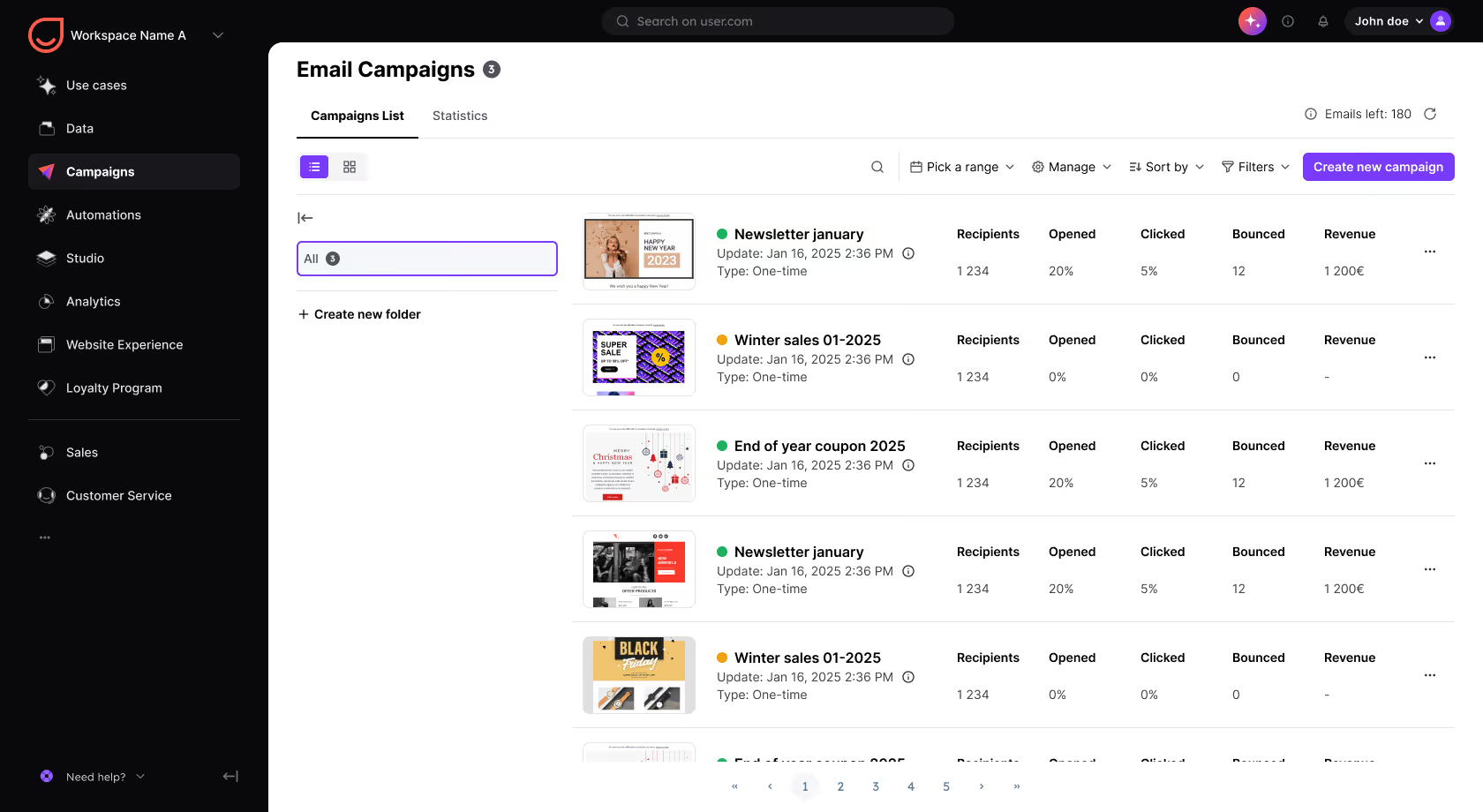
Customer segmentation software keeps audience segments up to date without manual exports. The Positive User segmentation engine builds dynamic audiences from behavior, demographics and context, and updates them in real time. Segments sit on one contact record that combines website behavior, purchases and message history, so the same segment can drive an email campaign, an SMS through your own gateway, a web push notification or a pop-up on your site. In the Journey Builder, joining or leaving a segment can trigger a workflow, which turns your segmentation strategy into automated, targeted marketing for current and potential customers.
{{CTA-BLOG}}
Common customer segmentation mistakes
- Too many segments. Twenty micro-segments with no distinct message add work without results.
- Static lists. A segment exported once and never updated sends yesterday's message to today's customer.
- Demographics only. Age and location rarely predict the next purchase as well as recent behavior does.
- No owner for the data. Segments are only as reliable as the customer data behind them.
- Measuring the total only. If you don't report per segment, you can't tell which segment drives the result.
FAQ
Start with three segments
Pick one goal, choose three segments that need different messages, such as new, active and lapsed customers, and build one campaign for each. Compare results per segment after a month, then refine.
Build dynamic segments in Positive User